
A page size checker spellmistake is a common issue many users face when searching for tools to measure website size and performance. A page size checker helps analyze total webpage weight, including images, scripts, and code. This is important for SEO optimization, website speed, and user experience. When spelling errors occur, users may miss the right tools or information, reducing traffic opportunities and lowering overall search visibility in search engines.
Many beginners often type wrong variations like “page sise checker” or “page size chekcer,” which leads to confusion and poor search results. This hook is important because even small mistakes can affect your access to the right online tools, keyword targeting, and technical SEO insights. Understanding correct spelling ensures better results and helps website owners quickly find accurate data for improving performance metrics, loading speed, and overall site health.
Using a page size checker properly allows you to improve web optimization, reduce heavy files, and enhance page loading speed. Small changes in spelling and usage can make a big difference in search accuracy. It also helps in identifying issues that affect crawlability, ranking signals, and overall digital performance of your website.
What is a Page Size Checker Tool?
A page size checker tool is an online utility used to measure the total size of a webpage. In 2026, websites are more advanced with heavy images, videos, scripts, and design elements. This tool scans all files like HTML, CSS, JavaScript, images, and fonts to calculate total page weight. It helps website owners understand how large their pages are and improve website speed, SEO performance, and user experience in a simple and effective way.
It is also useful for developers and bloggers because it shows which elements are making the page heavy. By analyzing results, users can easily fix slow-loading parts of a website. This improves site optimization, technical SEO, and page performance, making websites faster and more user-friendly in modern digital standards.
Why Page Size Matters for Website Performance
Page size matters because it directly affects how fast a website loads for users. In 2026, users expect instant loading on both mobile and desktop devices. If a page is too large, it loads slowly and increases bounce rate. Search engines also prefer fast websites, so smaller page size helps improve ranking signals, user experience, and website efficiency.
Optimizing page size makes websites smoother and more responsive. Heavy images, scripts, and videos increase load time and reduce performance. Reducing page size improves loading speed, mobile usability, and crawl efficiency, helping search engines index pages faster and rank them higher in search results.
Page Size Checker Tool Components Overview
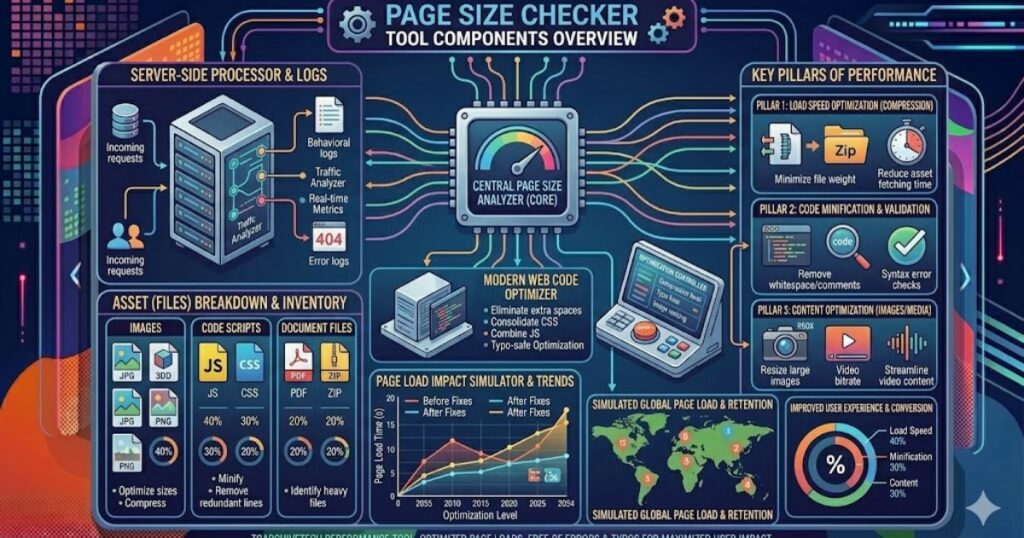
A page size checker tool breaks down each component to show how much it contributes to total webpage size. In 2026, this is very important because modern websites use more media-heavy content. Understanding each part helps improve performance optimization, speed analysis, and technical SEO clarity.
| Component | Description |
| HTML | Defines basic structure of webpage |
| CSS | Controls design and layout styling |
| JavaScript | Adds functionality and interactivity |
| Images | Visual content affecting page weight |
| Videos | Large media files increasing load time |
| Fonts | Typography files adding extra size |
By analyzing this table, website owners can easily identify heavy elements and optimize them. Reducing unnecessary weight improves page speed, user experience, and search engine ranking performance, making websites more efficient and competitive in digital spaces.
Page Size Checker Spellmistake – Common Typing Errors Explained
Many users make spelling mistakes while searching for page size checker tools. In 2026, common errors like “page sise checker,” “page size chekcer,” or “page size cheker” are still very common. These mistakes can lead to wrong search results or irrelevant tools. Correct spelling is important for better search visibility, keyword accuracy, and SEO performance.
Spelling errors can also confuse search engines and reduce result accuracy. When keywords are misspelled, users may not reach the right tools or information. Using correct spelling improves content discovery, organic reach, and overall search efficiency, helping users find reliable page size tools quickly.
How to Correct “Page Size Checker” Spelling for SEO
Correct spelling of “page size checker” is very important for SEO success in 2026. Search engines depend on accurate keywords to show relevant results. If spelling is wrong, content may not rank properly or reach the right audience. Using correct spelling in headings, titles, and descriptions improves keyword targeting, search ranking, and content visibility.Website owners should always review spelling before publishing content. Even small errors can reduce traffic and weaken SEO performance. Proper spelling helps search engines understand content clearly and improves organic reach, indexing speed, and overall digital presence across search platforms.
See more : TGArchirveTech Gaming: Ultimate Guide to Gaming Content, Reviews, and Tech Insights
Check Spelling Before Publishing Content
Before publishing any content, always check spelling carefully to avoid SEO mistakes and keyword confusion in search results.
- Review every keyword carefully before publishing website content for better search engine understanding and improved visibility results
- Use online spelling tools to ensure accuracy in headings, meta descriptions, and SEO-focused content writing structure
- Double-check focus keywords to prevent ranking loss and maintain strong organic traffic from search engines consistently
- Edit content multiple times to remove spelling errors that may reduce overall SEO performance and keyword strength
Use SEO Tools for Keyword Accuracy
SEO tools help identify correct spelling and improve keyword targeting for better ranking and search engine optimization results.
- Use SEO keyword tools to verify correct spelling and improve ranking potential for targeted search engine queries effectively
- Analyze keyword suggestions to ensure proper spelling consistency across all website pages and blog content updates regularly
- Check search volume tools to confirm correct keyword usage and avoid spelling-related ranking and traffic loss issues
- Rely on SEO software to optimize keyword accuracy and improve overall content visibility in competitive digital markets
Compare Common Misspellings
Comparing misspellings helps identify incorrect keyword usage and improves content accuracy for better SEO results and visibility.
- Compare misspelled keywords with correct versions to identify errors affecting search engine ranking and organic traffic performance
- Use search engine suggestions to find commonly typed incorrect spellings and fix them in your website content strategy
- Track keyword variations to understand user mistakes and improve SEO targeting with accurate spelling and optimized content structure
- Analyze competitor keywords to ensure your spelling accuracy matches industry standards and improves overall search visibility results
Optimize Content for Search Engines
Optimizing content with correct spelling improves SEO strength and helps search engines understand your website more clearly.
- Optimize webpage content using correct keywords to improve indexing speed and search engine ranking performance effectively online
- Maintain consistent spelling across all headings, meta tags, and descriptions for better SEO clarity and keyword strength
- Improve content readability by removing spelling errors that reduce user engagement and website performance in search results
- Use structured SEO writing techniques to ensure accurate keyword placement and stronger visibility in competitive search markets
Regular Content Audits
Regular content audits help detect spelling errors and improve SEO performance by keeping website content accurate and updated.
- Conduct regular content audits to find spelling mistakes and improve keyword accuracy for better search engine ranking results
- Update old blog posts with corrected keywords to maintain strong SEO performance and organic traffic growth consistently
- Use audit tools to identify SEO weaknesses and fix spelling errors affecting website visibility and search rankings
- Review content structure regularly to ensure consistent keyword usage and improved optimization for modern search engine algorithms
Importance of Accurate Keywords in Page Size Checker Searches
Accurate keywords are essential for getting correct and fast search results. In 2026, search engines focus strongly on user intent and exact keyword matching. If users type wrong keywords, they may not find useful tools. Correct keywords improve search accuracy, content relevance, and overall SEO strength.
Using proper keywords also helps websites attract the right audience. It ensures users find trusted tools without confusion or delay. Accurate keyword usage improves search visibility, click-through rate, and website engagement, making SEO strategies more effective and powerful in modern digital marketing.
How Page Size Checker Tools Work Step by Step
A page size checker tool works by scanning a full webpage to calculate total file weight. In 2026, websites include more complex elements like videos, scripts, and dynamic content. The tool collects data from HTML, CSS, JavaScript, images, and fonts. Then it calculates total page size and shows a clear report. This helps website owners understand performance issues and improve loading speed, SEO optimization, and user experience easily.
The tool also breaks down each element so users can see what is making the page heavy. It highlights large files and slow components that affect website speed. This makes it easier to fix issues quickly and improve technical SEO, site performance, and mobile usability, ensuring better results in search engines.
What Factors Increase Page Size on a Website?
Many factors can increase page size and slow down a website. In 2026, websites use more media-rich content, which often makes pages heavier. Large images, videos, and unoptimized scripts are the main reasons for slow performance. These issues directly affect website speed, SEO ranking, and user experience on both mobile and desktop devices.
| Factor | Description |
| Large images | Increase total page weight significantly |
| Heavy scripts | Slow down loading and processing speed |
| Videos | Add high file size to webpages |
| Uncompressed files | Increase overall loading time and size |
| Excess plugins | Add unnecessary code and resources |
| High-quality fonts | Increase page load and rendering time |
Large images increase loading time and reduce overall website performance on mobile and desktop devices significantly.Heavy scripts slow down page rendering and affect smooth user experience across modern web browsers today.Videos increase total page size and make websites slower for users with low internet speed connections.Uncompressed files take more space and reduce website loading efficiency in competitive search engine environments
How Large Page Size Affects Google Rankings
Large page size negatively affects Google rankings because it slows down website loading speed. In 2026, Google prioritizes fast and mobile-friendly websites for better user experience. If a page is too heavy, it increases bounce rate and reduces crawl efficiency. This leads to lower visibility in search results and weaker SEO performance, ranking signals, and organic traffic growth over time.
Slow websites also struggle to compete in search rankings because users leave quickly when pages take too long to load. Google detects poor performance and may rank such pages lower. Optimizing page size improves indexing speed, user engagement, and overall search engine visibility, helping websites perform better in competitive digital markets.
Best Tools for Checking Page Size Online
Several tools are available in 2026 to check page size and analyze website performance easily. These tools help detect heavy files, slow scripts, and optimization issues. They provide detailed reports that improve technical SEO, loading speed, and website efficiency, making them essential for developers and bloggers.
- Google PageSpeed Insights analyzes page size and provides performance improvement suggestions for better SEO results online
- GTmetrix checks website speed and shows detailed breakdown of page elements affecting loading performance significantly today
- Pingdom Tools helps monitor website performance and identifies heavy files slowing down user experience across devices
- WebPageTest provides advanced testing features to analyze page speed under different global server locations effectively
- Lighthouse audits website performance and gives SEO-focused reports for improving speed and accessibility scores quickly
- Site24x7 monitors page size and alerts users about performance issues affecting website loading and stability
How to Reduce Page Size for Faster Loading Speed
Reducing page size is important for improving website speed and SEO performance in 2026. Large files slow down websites and increase bounce rate. By optimizing images, scripts, and code, website owners can create faster and more efficient pages. This improves user experience, mobile performance, and search engine ranking significantly.
Compress images, remove unused scripts, and enable caching to reduce page size effectively. Also use lightweight themes and minimize CSS and JavaScript files. These improvements help websites load faster and perform better in search results, increasing SEO strength, crawl efficiency, and overall digital performance across all devices.
Image Optimization Tips to Control Page Size
A page size checker spellmistake can affect how users find correct optimization tips online, so correct spelling is important in 2026. Image optimization is one of the best ways to control page size and improve website performance. Large images slow down websites, so compressing and resizing them helps reduce load time. Proper optimization improves website speed, SEO ranking, and user experience in a simple and effective way.
Using modern image formats like WebP and lazy loading also helps reduce page weight. These techniques make websites faster and more mobile-friendly. Optimized images improve loading speed, crawl efficiency, and overall search visibility, helping websites perform better in search engines.
CSS and JavaScript Optimization for Smaller Page Size
A page size checker spellmistake often leads users to incorrect tools, which makes it harder to learn proper optimization techniques. CSS and JavaScript files can increase page size if they are not optimized. Minifying and combining these files helps reduce unnecessary code and improves website speed. In 2026, clean code structure is very important for SEO performance, loading speed, and website efficiency.
Removing unused scripts and using async loading can also improve performance. These methods reduce server load and make websites faster for users. Proper optimization enhances mobile usability, crawl speed, and overall search engine ranking, ensuring better digital performance.
Common Mistakes Found in Page Size Checker Reports
A page size checker spellmistake can also affect how users interpret search results and optimization reports. Many websites ignore key issues found in page size checker reports. Common mistakes include oversized images, uncompressed files, and unused scripts. These problems increase page weight and reduce overall website performance in 2026, affecting SEO ranking, user experience, and loading speed.Another common mistake is ignoring third-party scripts and unnecessary plugins. These elements slow down websites and increase load time significantly. Fixing these issues improves website efficiency, crawlability, and search visibility, helping websites perform better in competitive search engines.
Oversized Images Not Optimized Properly
- Large images increase page loading time and reduce overall website speed significantly on mobile devices
- Uncompressed image files consume more bandwidth and affect user experience across all modern browsers
- High-resolution images without optimization slow down SEO performance and reduce search engine ranking potential
- Missing image compression tools leads to heavy pages and poor website efficiency in 2026
Uncompressed CSS and JavaScript Files
- Uncompressed CSS files increase page weight and slow down rendering speed across all devices
- Large JavaScript files reduce website responsiveness and negatively impact user experience in modern web systems
- Lack of minification increases loading time and affects SEO performance in competitive search engines
- Unoptimized code structures make websites heavier and reduce overall performance and crawl efficiency
Ignoring Browser Caching Issues
- Not enabling caching increases repeated loading time and slows down user experience significantly on return visits
- Poor cache settings force browsers to reload full website content every single time users visit pages
- Lack of caching optimization increases server load and reduces website performance during high traffic periods
- Ignoring caching rules negatively impacts SEO ranking and overall page speed optimization results
Conclusion
In 2026, managing page size is very important for better website performance and strong SEO results. Using a page size checker helps identify heavy elements like images, scripts, and unnecessary code. Fixing these issues improves loading speed, user experience, and overall search engine ranking, making websites more efficient and competitive.
Small improvements in optimization can make a big difference in website success. When pages load faster, users stay longer and engagement increases. Proper use of tools and fixing errors ensures better website health, crawlability, and long-term digital growth across search engines.
FAQs
Q1: What is a page size checker spellmistake?
A page size checker spellmistake means typing wrong keywords like page sise checker, which can reduce search accuracy and affect SEO results in 2026.
Q2: Why is page size important for SEO?
Page size affects loading speed and rankings, so optimizing it improves performance, user experience, and search visibility in modern SEO strategies today.
Q3: How does a page size checker tool work?
A page size checker spellmistake may confuse users, but correct tools scan HTML, CSS, images, and scripts to calculate total webpage size accurately.
Q4: What causes large page size on websites?
Large images, uncompressed files, and heavy scripts increase page size, reducing speed and affecting SEO performance and overall website usability significantly.
Q5: How can I fix page size issues easily?
Use optimization techniques like image compression, caching, and code minification to reduce page size and improve SEO ranking and website performance quickly.