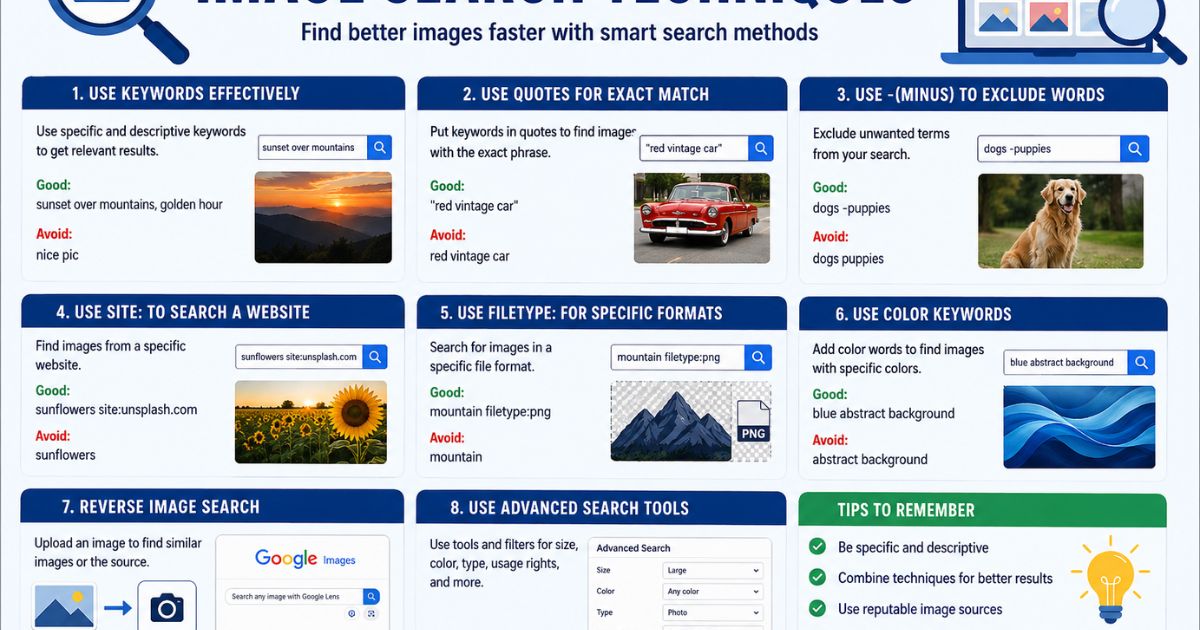
The digital landscape is shifting rapidly, making it harder than ever to find specific visuals using just basic text queries. To truly stand out, mastering advanced image search techniques is essential for creators, researchers, and digital professionals alike. By utilizing visual search technology and reverse image lookups, you can uncover hidden high-quality assets in seconds. This approach unlocks hidden data and streamlines your entire creative workflow.
Ever wondered how top creators instantly find the exact visuals they need while you are stuck scrolling endlessly? The secret lies in moving beyond basic keywords and typing.
By understanding search intent and utilizing contextual cues, you can instantly transform your daily asset discovery process. Stop wasting hours on broad queries when smarter, highly targeted image retrieval strategy is just a few simple clicks away.
What Are Image Search Techniques and Why Do They Matter?
Finding the perfect visual online requires more than just typing a single generic word into a browser. Modern image search techniques allow you to filter through millions of online graphics to find exact matches. By understanding search intent, you can locate precise visual assets much faster and improve your daily digital workflow.
Using the right strategy helps you discover highly relevant graphics without wasting time scrolling through endless pages. These smart image retrieval methods rely on contextual cues to match your specific needs. It bridges the gap between your thoughts and the massive libraries of visual data available online.
When you master these skills, you gain access to a wider variety of high-quality web graphics. This process leverages advanced information retrieval systems to ensure you always get the most accurate visual results. It is an essential skill for anyone working in content creation or digital media today.
How Image Search Engines Find and Rank Images
Search systems use computer vision to scan and analyze the actual pixel patterns inside an online photo. They read the image metadata and file names to understand what the graphic actually displays. This technical process helps the system index files correctly so they can appear in your daily results.
Algorithms also rely on natural language processing to read the text surrounding a photo on a webpage. They check the alt text descriptions to ensure the graphic matches the true meaning of your query. This ensures that the assets you see are highly relevant to your topic.
The final ranking depends heavily on how users interact with the visual content on the web page. Systems measure user engagement metrics like clicks and views to determine which graphics are the absolute best. High-quality, fast-loading photos that match user needs will always rank at the top.
Basic Keyword Techniques for Better Image Search Results
To get great results, you must use highly specific phrases instead of broad, single words. Adding clear descriptive modifiers like colors, styles, or specific locations helps narrow down your visual options quickly. This simple adjustment allows the system to filter out millions of completely unrelated web graphics.
| Keyword Strategy | Expected Search Result | Primary Benefit |
| Specific Modifiers | Narrows down colors and styles | Filters out unrelated files |
| Format Target | Finds vectors, clip art, or photos | Matches exact design needs |
| Contextual Words | Connects with relevant topics | Improves overall accuracy |
Using exact search queries ensures that the system connects directly with the right database files. You can combine your main topic with words like “diagram” or “vector” to target specific formats. This matches your exact informational intent and saves you from looking at useless graphics.
How to Use Reverse Image Search Like a Pro
Instead of typing letters, you can upload a photo directly to find its original online source. This advanced reverse lookup method compares the unique layout of your file against billions of other web documents. It is the fastest way to track down the creator or find similar styles.
This system utilizes deep pattern recognition to analyze shapes, colors, and textures within your uploaded file. It helps you verify the authentic content source and discover higher-resolution versions of the exact same graphic. It completely eliminates the need to guess the right descriptive words.
You can use this tool on mobile devices or desktop browsers to verify online information instantly. It excels at detecting visual plagiarism and tracking how your own original graphics are being shared online. It is a powerful tool for protecting your digital assets and finding inspiration.
Advanced Image Search Filters You Should Know
Modern search engines provide built-in tools that let you sort through files by their exact technical properties. You can filter by file type to isolate transparent PNGs, scalable vectors, or standard JPEG photos. This ensures you only see files that fit your current project specifications.
- Filter by specific time frames to discover the latest updated visual content available online today.
- Select exact color filters to match the specific color palette of your current design project.
- Choose the exact aspect ratio to find wide panoramic views or vertical smartphone layout photos.
- Sort by clip art or line drawings to get simple graphic illustrations instead of real photographs.
- Isolate face or portrait options when you specifically need high-quality photos of real human subjects.
- Set regional parameters to find localized visual assets that are trending in specific countries worldwide.
You can also sort results by usage rights to find graphics that are completely free for commercial projects. This protects your business from copyright issues by identifying files with proper Creative Commons licenses. It filters the web based on legal safety and availability.
Tips for Finding High-Resolution Images Quickly
To find crisp graphics, you should always utilize the specific size tools built into the browser. Selecting the large size filter forces the system to hide small thumbnails and low-quality files automatically. This simple step guarantees that every graphic you view meets professional printing or display standards.
- Use specific dimensions filters to ensure your chosen graphic fits big desktop screens perfectly.
- Look for stock photo sites that offer completely free high-density downloads for public commercial use.
- Avoid downloading low-quality preview thumbnails because they will look very blurry on your website.
- Type specific camera terms into your search bar to find authentic, professional-grade photography files online.
- Utilize advanced vector formats whenever you need to scale a graphic without losing its sharpness.
- Check the final file size to ensure the high-quality graphic will load quickly on mobile devices.
You can also check the pixel dimensions directly in the preview window before downloading any file. Look for high image resolution numbers like 1920×1080 or greater to ensure the asset stays sharp. This prevents you from wasting time downloading blurry or heavily pixelated files.
How to Search for Copyright-Free and Royalty-Free Images
Finding legal graphics for your digital media projects requires moving beyond a simple, generic web browse. Utilizing advanced image search techniques ensures you filter out files protected by strict intellectual property laws. By adjusting your dashboard settings, you can isolate assets that are entirely open for public use.
Modern search engines analyze the image metadata of a page to determine the legal status of an online graphic. When you use specific dashboard filters, the system processes these contextual cues to ensure compliant files surface. This process saves you from legal complications while looking for high-quality visuals.
You can also use specialized platforms that host galleries filled entirely with public domain files. These libraries use advanced information retrieval algorithms to help you sort through stock photos based on your creative needs. It bridges the gap between finding creative assets and maintaining full legal safety.
Image Search Techniques for Students and Researchers
Academic research requires highly precise visual assets to accurately support complex thesis statements or reports. Utilizing targeted image search techniques helps students bypass generic commercial graphics and focus entirely on educational material. This method saves valuable hours usually spent scrolling through irrelevant web content.
| Academic Focus | Expected Visual Result | Research Benefit |
| Scientific Data | Labeled anatomy and system charts | Delivers clear educational value |
| Historical Records | Archived photographs and text documents | Confirms authentic historical context |
| Statistical Charts | Infographics and data trend diagrams | Provides proof for thesis arguments |
To locate diagrams or data charts, you must match the exact search intent of your academic topic. Systems use specialized natural language processing to read the text surrounding an image on an educational webpage. This matches your highly specific query with the absolute best visual reference available.
Using Image Search to Identify Products and Objects
You can instantly identify an unknown object or consumer product by using a photo instead of typing descriptive text. This modern reverse lookup method allows you to upload a file directly to find exact marketplace matches online. It completely eliminates the need to guess brand names or specific model numbers.
The system relies on deep pattern recognition to analyze the physical shapes, colors, and textures within your uploaded file. By evaluating these distinct visual data points, the search engine quickly pinpoints the authentic content source. This connects you with buying options or informational articles about the object.
This process leverages advanced computer vision to scan billions of indexed web pages in a matter of seconds. It checks the embedded alt text and product listings across the web to ensure an accurate match. It is the most efficient way to shop or learn about things you see.
Best Mobile Image Search Tricks and Features
Mobile operating systems now allow you to scan your entire screen instantly without switching between different active apps. The popular Circle to Search tool lets you highlight any graphic on your smartphone display to trigger an immediate web lookup. This simplifies how you interact with visual content on the go.
- Scribble over an item in a social media video to find matching products instantly without typing.
- Use your phone camera to scan text inside an image and translate it to another language.
- Tap a specific plant photo to get instant botanical classification and care tips on your screen.
- Drag the bounding box corners to isolate a very small object inside a larger crowded photograph.
- Take a screenshot to save a graphic and use a mobile scanner to identify its brand.
- Voice search alongside your captured photo to add specific descriptive details to your visual query.
Smarter algorithms utilize contextual cues from your active screen to understand the true meaning of your selection. The device processes the user engagement data and visual layouts to deliver highly accurate, localized results on your phone. This makes finding fashion items or landmarks incredibly fast and seamless.
AI-Powered Image Search: How It Works
Modern visual systems use deep neural networks to understand the actual semantic meaning behind a photograph or graphic illustration. They utilize complex computer vision models to break down an entire photo into mathematical data points for analysis. This allows the system to recognize human faces, specific objects, and complex settings.
The technology combines these visual data points with advanced natural language processing to bridge the gap between words and pictures. This ensures that the engine can connect vague descriptive text phrases with the correct image retrieval results. It goes beyond simple file names to understand true artistic style.
As a result, your search system can accurately interpret highly complex queries that describe an emotional feeling or specific actions. By analyzing search intent on a deeper level, the algorithm surfaces highly accurate matches that standard keywords would miss completely. It transforms how we discover visual content across the digital landscape.
Frequently Asked Questions
1. What are image search techniques?
These are advanced methods used to filter, locate, and retrieve precise visual content across the web using smart keywords, filters, or reverse lookups.
2. How do image search techniques improve results?
By using targeted filters and descriptive modifiers, these methods eliminate irrelevant graphics and help you find high-resolution, contextually accurate visual assets instantly.
3. Can image search techniques find copyright-free files?
Yes, applying specific usage rights filters within your visual search dashboard helps you isolate graphics that are completely free for commercial projects.
4. Why should students learn image search techniques? They allow researchers to quickly bypass generic commercial clutter and locate precise educational diagrams, historical archives, and scientific data charts.
5. Do mobile devices support these image search techniques?
Yes, modern smartphones use built-in AI tools like Circle to Search to scan displays and find matching online objects without typing.